
Analysts predict that crude oil prices, geopolitical tensions in West Asia, and upcoming inflation data will be the primary drivers of the Indian stock market this week, alongside foreign investor activity and domestic quarterly earnings.

Indian stock markets closed lower due to selling in IT and FMCG shares, triggered by renewed tensions in West Asia which led to a rally in crude oil prices and concerns over inflation and interest rates.

Chinese President Xi Jinping addressed the BRICS summit, urging the bloc to play a significant role in achieving peace and tranquillity in West Asia and the Gulf region. He highlighted BRICS' growth over two decades, its efforts in tackling global challenges, and its steadfastness in safeguarding the interests of the Global South. Xi called for opposing the Cold War mentality, strengthening multilateralism, and promoting cooperation in emerging domains like AI, as China prepares to chair the next summit.
Indian benchmark equity indices, Sensex and Nifty, experienced declines in early trade due to renewed tensions in West Asia, which led to a rebound in crude oil prices, coupled with weak global market trends and foreign fund outflows.

Indian benchmark indices, Sensex and Nifty, experienced a significant downturn as escalating tensions in West Asia led to a sharp surge in crude oil prices, coupled with fresh foreign fund outflows and a weakening rupee.

Indian benchmark indices, Sensex and Nifty, recorded their fifth consecutive day of losses, driven by investor caution over rising oil prices due to West Asia tensions and renewed concerns regarding US trade tariffs.

Indian benchmark indices Sensex and Nifty extended their losses for the fourth consecutive session, with the Sensex declining 363.66 points and the Nifty dipping 126.65 points, primarily due to a sharp jump in Brent crude oil prices to USD 98.32 per barrel amid escalating tensions in West Asia.

Even if there is an early agreement on a cessation of hostilities in West Asia, the price shock will not go away easily, points out A K Bhattacharya.

Indian companies' overseas expansion plans are holding strong despite geopolitical tensions in West Asia, driven by structural factors like supply-chain diversification, free trade agreements, and market expansion, according to Ajay Sharma, managing director and head of banking at HSBC India.

Indian benchmark indices Sensex and Nifty experienced a significant slump in early trade, mirroring weak global trends, as escalating tensions in West Asia, particularly a drone attack on the UAE's Barakah nuclear facility, pushed crude oil prices higher. Track Sensex, Nifty50 movement and key market drivers for May 18, 2026.

Analysts predict that developments in West Asia and their impact on crude oil prices will heavily influence investor sentiment in the upcoming week. Global market trends, foreign investor activity, and rupee-dollar movement will also play a role.
Indian benchmark equity indices experienced a significant downturn, with the Sensex plummeting over 800 points and the Nifty falling sharply, driven by rising crude oil prices, geopolitical tensions, and foreign capital outflows.
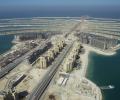
Ongoing geopolitical tensions in West Asia have slowed deal momentum in Dubai's luxury residential market, but Indian high-net-worth individuals (HNIs) are not exiting their marquee assets, with any 'discounted' resale deals attributed to investor liquidity stress rather than geopolitical flight.

Non-resident Indians are increasingly investing in luxury homes in India, driven by geopolitical uncertainties, particularly the Iran war. This trend is observed across major cities like Mumbai, Bengaluru, and the National Capital Region, with developers noting a significant rise in NRI pre-sales. While some see it as a temporary shift, others believe India is becoming a stable, long-term investment destination for NRIs, especially those from West Asia.

Foreign investors have withdrawn a record Rs 1.14 lakh crore from Indian equities in March, driven by geopolitical tensions, a weakening rupee, and concerns about crude oil prices.

The conflict may disrupt Budget 2026-2027 projections, squeezing revenues and raising subsidies, prompting fiscal adjustments and potential reforms, echoing lessons from the Covid-era shock, points out A K Bhattacharya.
Foreign portfolio investors (FPIs) withdrew a substantial amount from Indian equities in the first half of March, driven by geopolitical tensions, rupee depreciation, and concerns about crude oil prices.

Indian benchmark equity indices Sensex and Nifty experienced a significant crash in early trade, triggered by a sharp increase in crude oil prices and escalating tensions in the Middle East.

Indian benchmark indices Sensex and Nifty experienced a significant slump in early trade, mirroring a bearish trend in global equities, as escalating conflict in West Asia drove up crude oil prices and intensified investor concerns.

Foreign portfolio investors (FPIs) have injected Rs 30,919 crore into Indian equities in August, marking their second consecutive month of net buying. This follows a Rs 20,200 crore investment in July, indicating a potential reversal after four months of significant outflows, driven by improving corporate earnings, resilient economic activity, and a stable rupee.

India's fresh investment plans in Q1FY27 surged 71 per cent to 14.77 trillion, primarily driven by four large nuclear power projects worth 6.5 trillion, according to investment monitoring firm Projects Today. Excluding these nuclear projects, fresh investment plans actually declined 4.27 per cent quarter-on-quarter.
Indian stock markets are set to be influenced by developments in US-Iran negotiations, crude oil prices, and foreign investor activity in the upcoming holiday-shortened week, according to market analysts.

Indian stock markets ended a five-day losing streak, with the Sensex surging 776 points and the Nifty gaining 228 points, driven by a significant drop in crude oil prices and easing geopolitical tensions in West Asia.
Indian benchmark indices Sensex and Nifty experienced a significant decline in early trade, with the Sensex falling over 500 points and the Nifty over 150 points, as Brent crude oil prices surged past USD 100 per barrel due to escalating geopolitical tensions in the West Asia. track sensex, Nifty on July 24.

Gold futures experienced their seventh consecutive daily decline, falling to Rs 1.5 lakh per 10 grams, driven by escalating military exchanges between the US and Iran which have pushed oil prices higher and intensified concerns over inflation and potential interest rate hikes.
Indian benchmark indices, Sensex and Nifty, experienced significant declines, with the Sensex falling 493 points and the Nifty dropping for the sixth consecutive day, primarily due to elevated crude oil prices reaching USD 91 per barrel and diminishing hopes for a diplomatic resolution in West Asia.

India's finance ministry anticipates inflation will remain relatively contained in the coming months, supported by a correction in crude oil prices and softening input costs following the cessation of the West Asia conflict, despite earlier spikes in wholesale and retail inflation.

Indian benchmark indices Sensex and Nifty surged in early trade, with the Sensex jumping nearly 700 points, primarily driven by strong buying in IT stocks following TCS's positive June-quarter results and optimistic demand outlook. Track Sensex, Nifty on July 10, 2026.
Indian benchmark indices Sensex and Nifty closed lower for the second consecutive day, driven by investor caution over conflicting geopolitical signals from West Asia and fresh foreign institutional investor (FII) outflows.

'Periods of heightened volatility, driven by global events such as tariffs and geopolitical tensions over the past year-and-a-half, can make some investors pause or discontinue their investments.'
Indian benchmark indices Sensex and Nifty experienced a decline in early trade, mirroring weak global market trends and persistent outflows from foreign institutional investors (FIIs), exacerbated by ongoing geopolitical uncertainties in West Asia.

Higher US Treasury yields, particularly the 10-year yield approaching 5 per cent, pose a significant near-term risk to global equity markets, including India, potentially triggering a 'big correction' according to market strategists.

The Indian government is set to accelerate reforms, including measures to enhance foreign direct investment, speed up divestment, and boost asset monetisation, to maintain economic growth despite rising fuel and fertiliser import costs driven by the West Asia crisis.

Indian benchmark equity indices, Sensex and Nifty, opened higher, tracking positive global trends and easing crude oil prices, fueled by hopes of a swift resolution to the West Asia conflict. Track Nifty 50 and BSE Sensex performance and key global triggers.
Indian equities on Dalal Street saw volatility as global market trends and fresh tariff concerns linked to Donald Trump impacted investor sentiment. Track Sensex, Nifty50 movement and key market drivers for March 30, 2026.

'I don't see fear becoming a dominant factor for retail investors.'

Non-resident Indians (NRIs) in the Gulf region are increasingly purchasing term life insurance policies from India, driven by geopolitical uncertainties in West Asia and the significant cost advantages offered by Indian products, with the GCC region now contributing over half of the total NRI demand.

Indian benchmark indices Sensex and Nifty advanced in early trade, driven by renewed foreign fund inflows and a significant drop in crude oil prices to pre-war levels, signalling an uptrend in the market. Track Sensex, Nifty on July 7, 2026.

Indian benchmark indices Sensex and Nifty climbed in early trade, driven by buying in blue-chip stocks like Reliance Industries and ICICI Bank, alongside a notable cooling in crude oil prices.

The challenge for India lies in navigating complex landscape to its best advantage. The BRICS Summit will test its navigation skills, asserts former foreign secretary Shyam Saran.
